Recruitment vs Automation: Where Should Franchisors Invest?
More leads, or better systems? The honest answer depends on where your pipeline is actually leaking.
Every franchisor I speak to asks a version of the same question: do I put the next budget into generating more franchise leads, or into the systems that handle the ones I already get?
It is the right question. It is usually answered with a gut feel and whichever supplier is in the room — the recruitment agency says buy leads, the software vendor says buy software. Both are talking their own book.
In a live pipeline, what actually happens is most franchisors are told to buy more leads when the real problem is they cannot handle the leads they already have.
It is a fair question with an unfair default answer. Ask a recruitment agency and the answer is always more leads. Ask a software company and the answer is always their platform. Almost nobody sells the diagnosis first — where your pipeline is actually losing people — because the diagnosis does not always end in the product they happen to sell.
The leak most franchisors cannot see
Speed-to-lead is the leak. The numbers on it are not subtle.
The MIT/InsideSales Lead Response Management study — 15,000 leads and over 100,000 calls — found that contacting a lead within five minutes rather than thirty makes you 21 times more likely to qualify it. A separate Harvard Business Review audit of 2,241 firms found the average first response took 42 hours, and 23% of enquiries were never contacted at all.
The same MIT/InsideSales research found the effect is sharper still on reaching the lead at all — responding within five minutes rather than thirty made firms around 100 times more likely to make contact. Harvard Business Review added the other half: get to a lead within an hour and you are roughly seven times more likely to have a real conversation than a firm that waits a day. Franchise enquiries do not sit quietly waiting. Someone who fills in your form has usually filled in three others.
Most franchisors never see this because the leak is silent. There is no alarm when a lead goes cold — it simply never replies, and a non-reply looks exactly like a bad lead. So the conclusion becomes “we need better leads,” when the truth is “we needed to call the good ones faster.”
More likely to qualify
21×
Responding in 5 minutes vs 30. Source: MIT/InsideSales Lead Response Management study.
Average first response
42 hrs
Across 2,241 firms — with 23% never responding at all. Source: Harvard Business Review.
Most franchisors do not have a lead problem. They have a response problem.
A simple test: where is your money leaking?
Picture your recruitment funnel — enquiry, contacted, qualified, discovery, signed. Now ask where the biggest drop happens. For most networks it is not at the top. It is between “enquiry” and “contacted,” and again at follow-up. That is speed and consistency, not volume.
A typical franchise recruitment funnel (of 100 enquiries)
Illustrative funnel. Contact-rate loss reflects HBR findings — 42-hour average response; 23% never contacted.
Read the funnel from the top. The first drop — enquiry to contacted — is almost pure speed and coverage: leads that were never called, or called too late. The second — contacted to qualified — is follow-up: one attempt instead of five. Neither is a volume problem. Buying more enquiries widens the top of a funnel that is leaking hardest near the top.
Pour more spend into that funnel and you are simply feeding a leak. The enquiries you paid for last month are going cold in an inbox this month.
The fix is rarely dramatic. Most of the recovery comes from two changes: making sure every enquiry is contacted fast, and making sure follow-up happens the same way every time rather than whenever someone remembers. Those are exactly the two things a person juggling ten other jobs cannot guarantee — and exactly the two things automation does without being asked.
When to spend on recruitment — and when on automation
Here is the framework, minus the sales pitch.
| If this is true… | Invest in… | Because… |
|---|---|---|
| Response time is hours; contact rate is low; leads go cold | Automation first | You are already paying for leads you never speak to |
| Follow-up is inconsistent and depends who is free | Automation first | Consistency converts; effort alone does not |
| Your funnel converts well but you are simply out of volume | Recruitment spend | The system works — it just needs more to work on |
| You cannot measure response time or contact rate at all | Automation first | You cannot fix, or trust, what you cannot see |
If two or three of those rows describe your network, more ad spend is the wrong first move — not because it would not add leads, but because it would add them to a process that cannot hold the ones you already have.
For most franchisors, the honest read is automation first — not because leads do not matter, but because the leads you already buy are worth far more once nothing slips.
None of this means recruitment spend is wrong. There is a real point — once your funnel genuinely converts and you are simply out of volume — where more leads is exactly the right investment. The mistake is reaching for it first, before the funnel can hold what it already receives. Order matters more than amount.
The maths of fixing the system first
Why the order matters
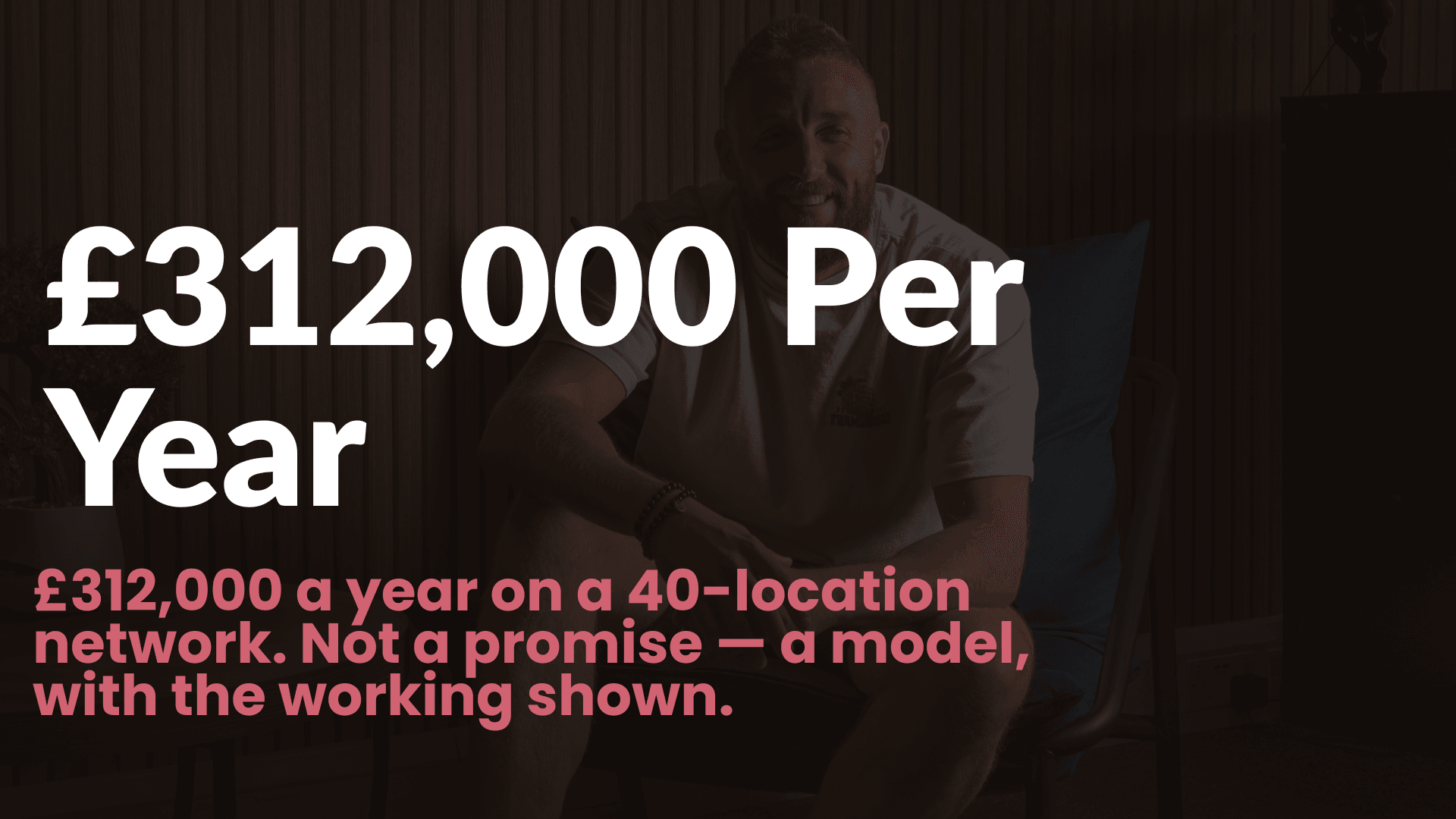
Six franchisees a year at a £20,000 fee is £120,000. A sub-60-second response and a 35% lift in lead-to-conversation do not add a line to that — they multiply it, across every lead you already pay for. Spend on more ads scales in a straight line. Spend on response compounds across every enquiry, this year and next.
That is the difference between a cost and a multiplier. KORE by SOOM® is the multiplier — an AI Caller that responds in under a minute, 24/7, so no enquiry waits 42 hours and none of the 23% goes uncontacted. Custom-built for franchise recruitment, not a generic dialler pointed at a franchise.
The uncomfortable version: two franchisors can run the identical ad budget and sign wildly different numbers, purely on how fast and how consistently they respond. One treats every enquiry as a five-minute priority; the other lets them age in an inbox. Same spend, same market, different business. Automation is simply how you make sure you are the first franchisor to call.
What to do this week
Pull two numbers: your average lead response time, and your contact rate. If you cannot, you have found your first project. If you can, you will almost certainly find the leak is downstream of your ad budget, not upstream.
If the numbers are poor, you have found a project with a near-guaranteed return — you are already paying for the leads; you are just not converting them. If you cannot produce the numbers at all, that is the more urgent finding: you are running a recruitment operation with the instruments switched off.
Either way, the budget question tends to answer itself. You do not need more leads until you can prove you are converting the ones you already have.
This is the practical “where to invest” call. For the deeper argument on why it was never a straight choice, read why it is not automation versus recruitment — and the full £312,000 breakdown puts a number on the leak. See how SOOM approaches franchise marketing.
Previous in this series
← What Inefficient Onboarding Is Costing Growing Franchise Brands
Next in this series
Automation vs Recruitment in Franchising →
SOOM® helps franchisors turn manual operations into systemised growth. Explore franchise marketing with SOOM →